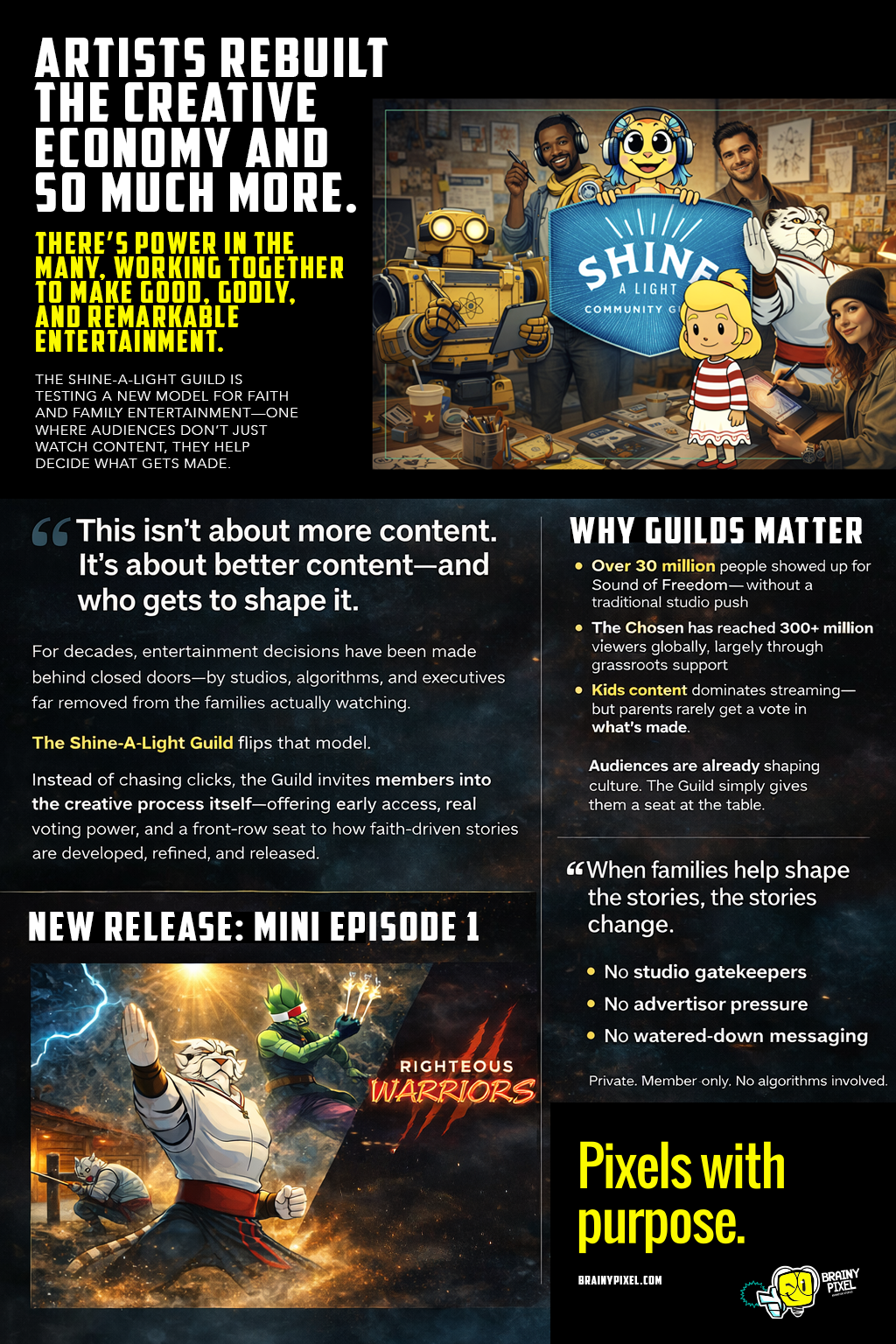
How a scrappy guild of artists is changing the model
There’s a familiar myth in the creative industries: great work comes from big budgets, elite gatekeepers, and a velvet rope guarded by algorithms and executives who “get it.” But every so often, a counter-story slips through the cracks—one built not on scale, but on faith, collaboration, and the stubborn belief that good stories still matter. That’s the quiet revolution taking shape inside Shine-A-Light Guild, a growing community of artists, writers, animators, and storytellers banding together with Brainy Pixel Animation Studios to make content that’s thoughtful, spiritually grounded, and—here’s the real heresy—actually fun. This isn’t nostalgia bait or Sunday-school reruns with better lighting. It’s a design-minded, creator-driven experiment in what happens when you stop waiting for permission and start pouring what you already have.
The Myth of “Not Enough”
The Guild’s operating principle echoes an ancient story that feels uncomfortably relevant in today’s creator economy. In 2 Kings 4:1–7, a widow tells the prophet Elisha she has nothing left—except a little jar of oil. That overlooked detail becomes the hinge of the miracle. The oil multiplies, debts are paid, and scarcity is exposed as a lie—but only because she acted before she saw the result. Shine-A-Light Guild was built on the same defiant premise: stop undervaluing the “little bit” you already have. A short script. A rough sketch. Five dollars. One empty evening. A small audience that actually cares. Instead of chasing virality, the Guild collects empty vessels—artists willing to collaborate, fans willing to support early, and creators willing to show up before the payoff is obvious. The oil doesn’t flow because the platform is massive. It flows because there’s room for it.
Design Over Dogma
What makes this model quietly radical is its aesthetic confidence. Brainy Pixel’s projects don’t look like content made just for Christians. They look like content made by professionals who understand story, pacing, humor, and visual language—and who happen to believe faith should be woven, not shouted. Think Rolling Stone’s love of subculture meets Fast Company’s obsession with systems. The Guild isn’t a studio in the traditional sense; it’s more like a creative commons with spiritual intent. Artists aren’t just contributors—they’re co-builders. Viewers aren’t passive—they’re early backers, collaborators, and curators of what gets made next. This mirrors another oil-soaked moment from 1 Kings 17:12–16, where a widow prepares her last meal during a famine, only to find her jar never runs dry. The throughline is unmistakable: abundance follows obedience, not the other way around.
Action Before Applause
The most countercultural move Shine-A-Light Guild makes isn’t theological—it’s operational. The model rewards actionable faith. You don’t wait for the greenlight; you gather the jars. You don’t hoard ideas; you pour them out. You don’t protect scarcity; you design for multiplication. In an era where creators are burned out by platforms that monetize attention but starve meaning, this approach feels almost rebellious. It suggests that community might be a better growth engine than algorithms—and that trust might scale better than hype.
Why This Matters Now
We’re living in a moment of creative exhaustion. Content is abundant; conviction is rare. Shine-A-Light Guild is betting that there’s still an audience hungry for stories with backbone—stories that believe something, risk something, and invite others to help shape what comes next. The oil keeps flowing until the vessels run out. The question isn’t whether there’s enough creativity, funding, or talent. The question is whether there’s still room—room for collaboration, for obedience before evidence, for stories that don’t apologize for being good and God-honoring.
Turns out, a little oil goes a long way when you stop treating it like nothing.
 The Collective Agency : : Marketing, Creative & Innovation for Faith-Based Impact